
27 May 2026 · 8 min read
The Rolex Explorer 5504, a footnote that demands attention
By Wasting Time
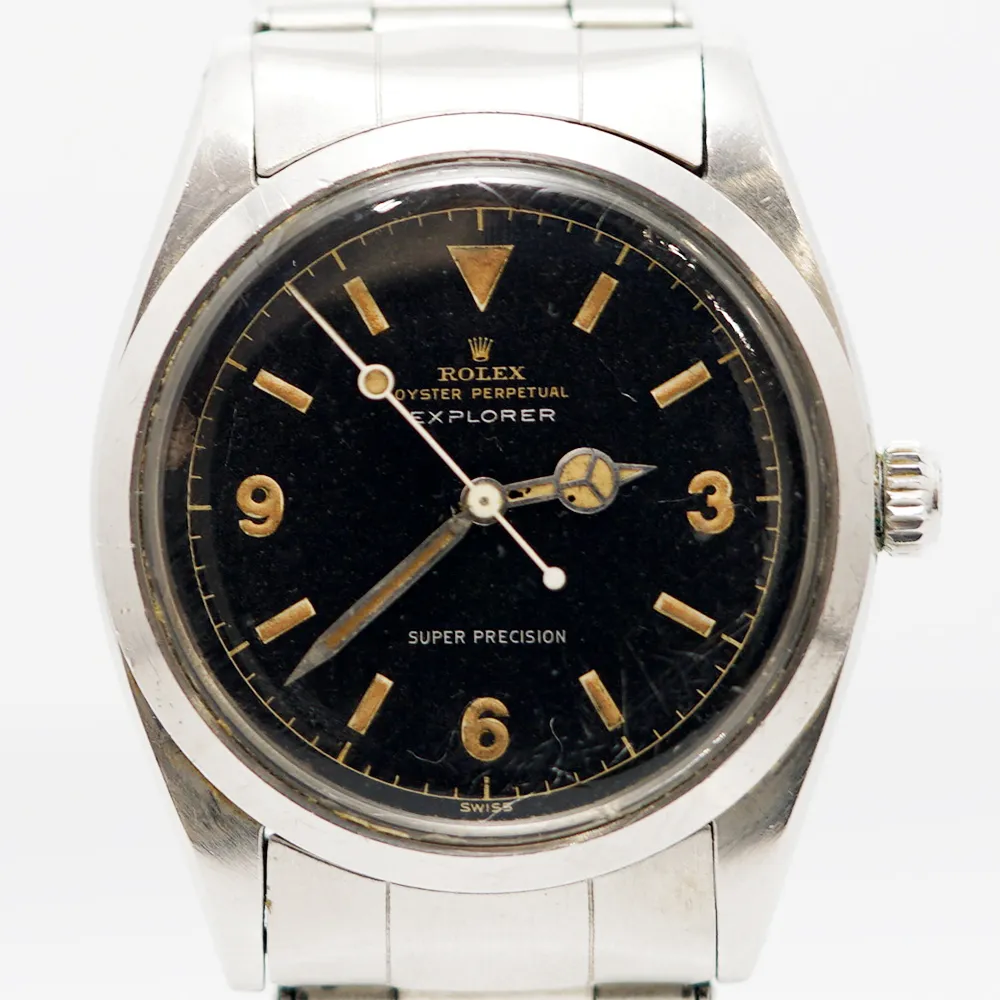
Produced in limited numbers during the late 1950s, the <em>ref. 5504</em> occupies a peculiar place in the <em>Explorer</em> lineage, scarcer than the <em>6610</em>, more enigmatic than the <em>1016</em>, and almost never seen.
The Rolex Explorer emerged in 1953 as a direct response to the successful ascent of Everest by Hillary and Tenzing, both of whom wore Rolex Oyster Perpetual watches during the expedition. While the ref. 6610 became the first officially designated Explorer, the ref. 5504 appeared shortly thereafter in the late 1950s as a small-crown variant bridging the gap between early tool watches and the more refined 1016 that would dominate production from 1963 onwards. Fitted with the smaller 6mm crown rather than the oversized 8mm crown of the 6610, the 5504 was produced in extremely limited quantities, making it one of the scarcest references in the entire Explorer catalogue.
A short history of the reference
By the mid-1950s, Rolex had established itself as the default choice for those venturing into hostile environments. The Oyster case had proven its water resistance, the self-winding Perpetual rotor had eliminated the need for daily winding, and the brand's association with Everest had given it a narrative edge that competitors struggled to match. The ref. 6610, introduced in 1953 with its large 8mm crown and 3-6-9 dial configuration, became the blueprint for what an Explorer should be, legible, robust, and devoid of pretension.
The ref. 5504 appeared sometime around 1958, though Rolex has never disclosed precise production dates or quantities. What distinguishes it immediately is the **smaller 6mm crown**, a specification more typical of dress watches than tool watches. This crown size would later become standard with the ref. 1016, but during the late 1950s it marked the 5504 as an outlier. Some examples feature the honeycomb dial texture, a stamped pattern that catches light differently than the smooth dials of the 6610 or early 1016. Collectors debate whether this dial variation was intentional or simply a function of supply-chain pragmatism during a period when Rolex was scaling production rapidly.
Powered by the Calibre 1530, a self-winding movement operating at 18,000 vph with 25 jewels, the 5504 featured the same robust architecture that Rolex had refined throughout the decade. The movement incorporated a free-sprung Microstella balance and shock protection, essential for a watch intended to withstand the rigours of high-altitude mountaineering and exploration. The case measured approximately 36mm in diameter, maintaining the same proportions as the 6610 but distinguished by its crown specification and occasionally by dial variations that serious students scrutinise today.
Production of the 5504 was brief, likely ceasing by 1960 or 1961 as Rolex prepared to introduce the ref. 1016. The result is a reference that exists in the low hundreds, with **surviving examples numbering far fewer than the 6610 or 1016**. It is not uncommon for years to pass between auction appearances, and when they do surface, condition and originality vary wildly. Some have been over-polished, re-dialled, or fitted with incorrect components during decades of service. Finding an example that retains its original proportions and patina is a challenge that defines much of the 5504's appeal.
The piece in front of you
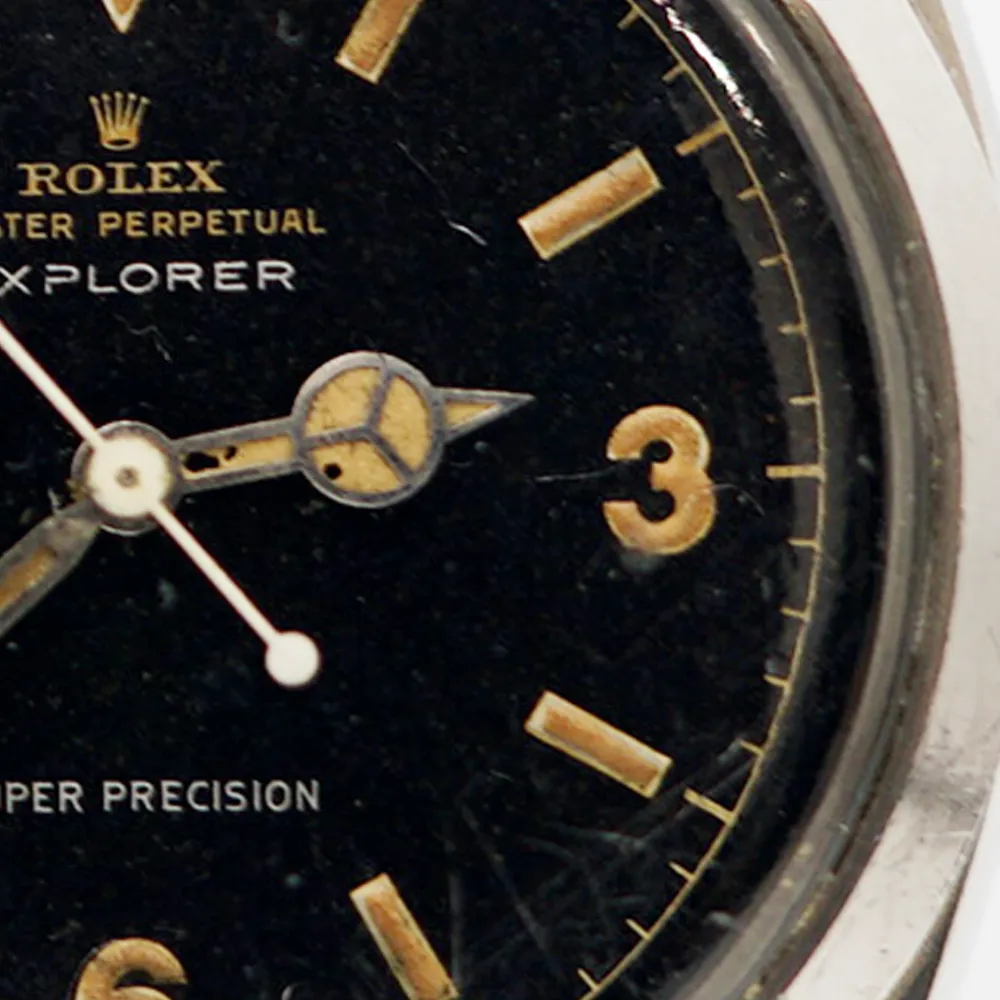
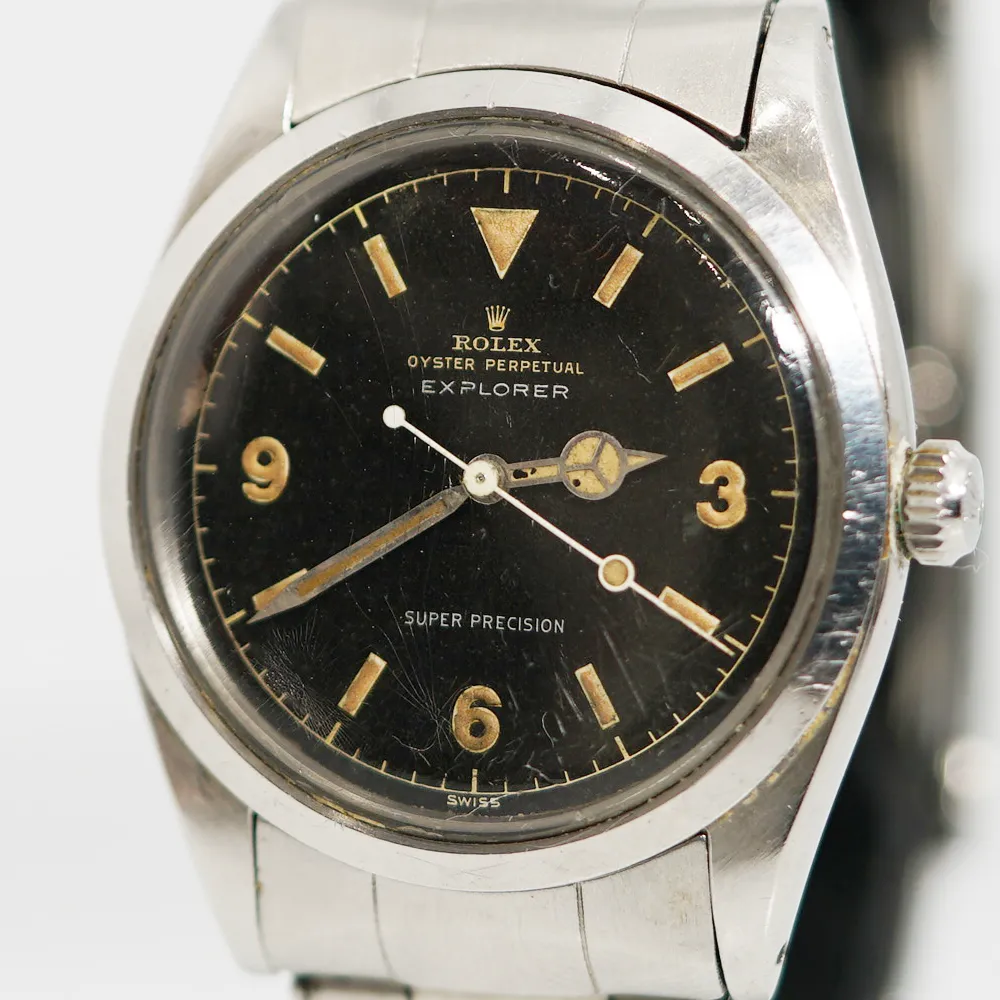
This example presents in a condition consistent with a timepiece of approximately sixty-five years. The case appears to retain its original proportions, though some polishing is evident to the lugs and bezel. The wear is not aggressive, the bevels remain, the lugs have not thinned dramatically, but it is clear that the watch has been serviced and refinished at some point in its life. For a reference this scarce, such intervention is almost expected. The alternative, a watch that has never been touched, is vanishingly rare and commands premiums that reflect that fact.
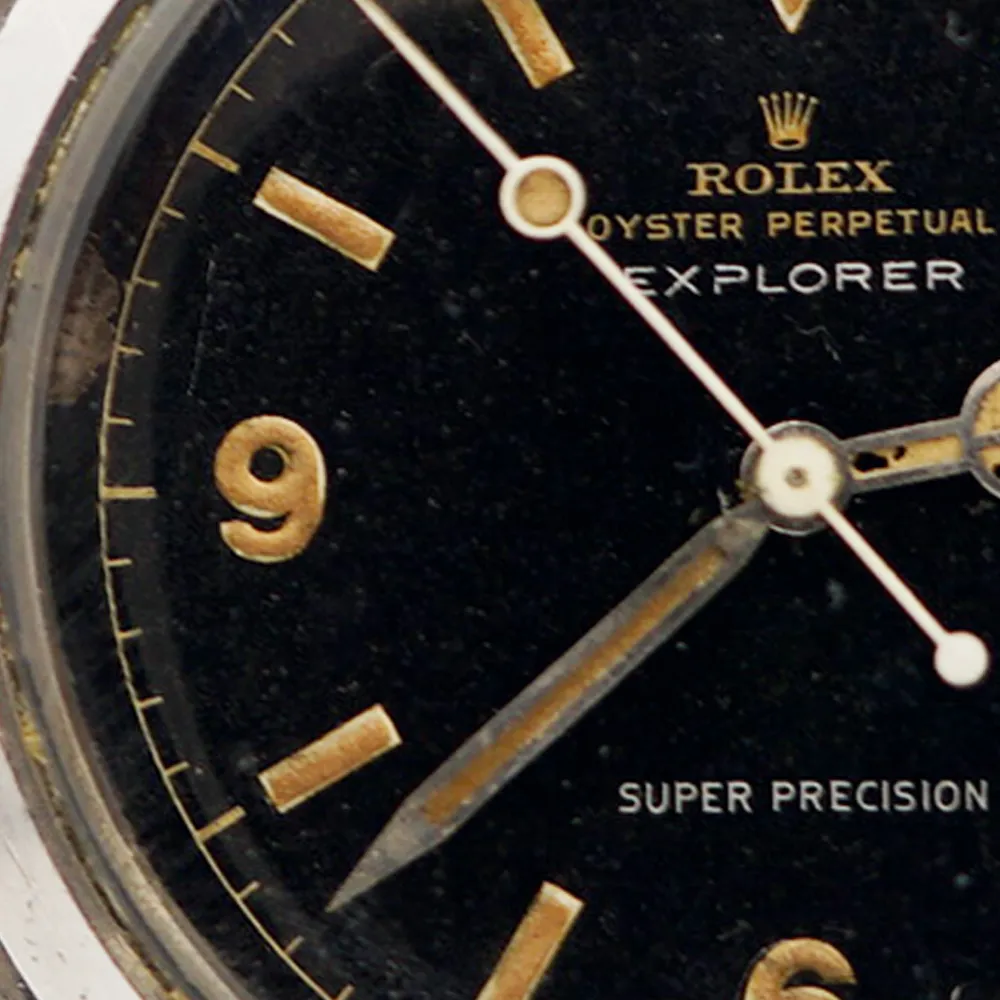
The dial shows signs of age-related patina, and the luminous material has developed the warm tone expected of radium-based compound from this period. The lume has darkened unevenly, a common occurrence as the radium decays and interacts with moisture over decades. The hands appear correct to the reference, though the lume has taken on a slightly different hue than the hour markers, suggesting either different batches of luminous material or differential exposure to light and humidity. This kind of inconsistency is typical of watches that have lived full lives outside of climate-controlled storage.
The honeycomb dial texture remains visible, though the pattern has softened with age. Under certain lighting, the stamped texture catches the eye, giving the dial a depth that smooth dials lack. The 3-6-9 configuration is intact, with the Explorer designation printed below the hands. The dial does not present as mint, nor should it. For a watch produced in the late 1950s and likely worn regularly for at least part of its life, the patina falls within the range of what collectors consider acceptable for a 5504.
The watch is presented on a Rolex Oyster bracelet, though without original box or papers. The absence of documentation is not unusual for a reference this old, particularly one that likely changed hands several times before entering the collector market. Without accompanying materials, this example relies upon its inherent rarity and the strength of the 5504 reference itself. Prospective collectors should have the watch inspected by a qualified watchmaker prior to acquisition, as the movement would benefit from a service.
On the wrist
At 36mm, the 5504 sits comfortably on most wrists, though it reads smaller than modern sports watches that have crept past 40mm. The proportions feel correct, the lugs do not overhang, the dial does not dominate, and the overall effect is one of restraint rather than presence. This is not a watch that announces itself. It sits quietly, performing its function, and rewards closer inspection rather than demanding it from across a room.
The smaller crown does not impede winding or time-setting, though it requires more deliberate engagement than the oversized crown of the 6610. For those accustomed to modern Rolex sports watches, the crown may feel undersized, but in the context of late-1950s watchmaking, it is entirely appropriate. The screw-down mechanism operates smoothly, and the crown sits flush against the case when secured, maintaining the clean lines that define the Explorer aesthetic.
The Oyster bracelet integrates well with the case, though the end links show the slight gap typical of bracelets from this period. The clasp operates as expected, and the overall construction feels robust despite the watch's age. On the wrist, the 5504 wears like a tool watch that has been refined just enough to avoid feeling utilitarian. It is not precious, but it is not crude. It occupies the middle ground that Rolex mastered during this era, functional, reliable, and quietly authoritative.
The movement and build
The Calibre 1530 represents Rolex's mature approach to self-winding movements during the late 1950s. Operating at 18,000 vph with 25 jewels, the movement incorporates a free-sprung Microstella balance, allowing for fine adjustments without the need for index pins. The architecture is robust, designed to withstand shocks and temperature variations that would compromise less resilient movements. The rotor winds efficiently, and the power reserve, though not specified by Rolex at the time, is sufficient for daily wear.
The movement would benefit from a service, as is typical for watches of this age. Without recent documentation, it is difficult to assess when the movement was last overhauled, but given the watch's condition and the likelihood of previous servicing, a competent watchmaker should be able to restore full functionality without difficulty. The Cal. 1530 is well-documented, and parts, while not abundant, are available through specialist suppliers who service vintage Rolex movements.
The case construction adheres to the Oyster standard, with a screw-down caseback and crown ensuring water resistance. The gaskets will need replacement during service, but the case itself appears sound. The bezel is smooth, without the bidirectional rotation of the GMT-Master or the unidirectional lock of the Submariner. It is a fixed bezel, serving no function beyond framing the dial. This simplicity is part of the Explorer's appeal, no complications, no extraneous features, just the essentials executed well.
Why it matters now
The ref. 5504 occupies a peculiar place in the Explorer lineage. It is not the first, not the most produced, and not the most celebrated. It is a transitional reference, a footnote in the official narrative, and yet it is **among the rarest Explorer references produced**. For collectors who value scarcity and historical nuance over brand mythology, the 5504 represents an opportunity to acquire a watch that slipped through the cracks of popular consciousness.
The Explorer has remained an icon of understated functionality, worn by explorers, scientists, and those who valued precision timekeeping in demanding environments. Its association with polar expeditions and high-altitude achievements cemented its reputation beyond Everest, though the model never courted celebrity in the manner of the Submariner or GMT-Master. The 5504 in particular represents a chapter in Rolex history that serious collectors pursue precisely because of its scarcity and transitional character.
Today, the ref. 5504 commands attention at auction whenever examples surface, with **only a handful appearing on the market each year**. Collectors prize original dials, unpolished cases, and provenance that can establish the watch's journey from wrist to collection. This example, while lacking documentation, offers the core attributes that define the reference, the small crown, the honeycomb dial, and the Cal. 1530 movement. The condition reflects its age and use, and the absence of box and papers should be reflected in expectations regarding value and future marketability.
As the Explorer narrative continues to captivate those who value purposeful design over ostentation, the 5504 remains a grail-level acquisition for students of early Rolex sports watches. It is not a watch for those seeking pristine examples with full documentation. It is a watch for those who understand that rarity, even in imperfect form, carries its own weight.
For Wasting Time, this 5504 represents a rare opportunity to acquire a reference that seldom surfaces, presented honestly and without embellishment. It is a watch that rewards study, demands inspection, and will continue to intrigue long after the transaction concludes.
This piece is currently available through Wasting Time. View the listing or enquire for full provenance and pricing.