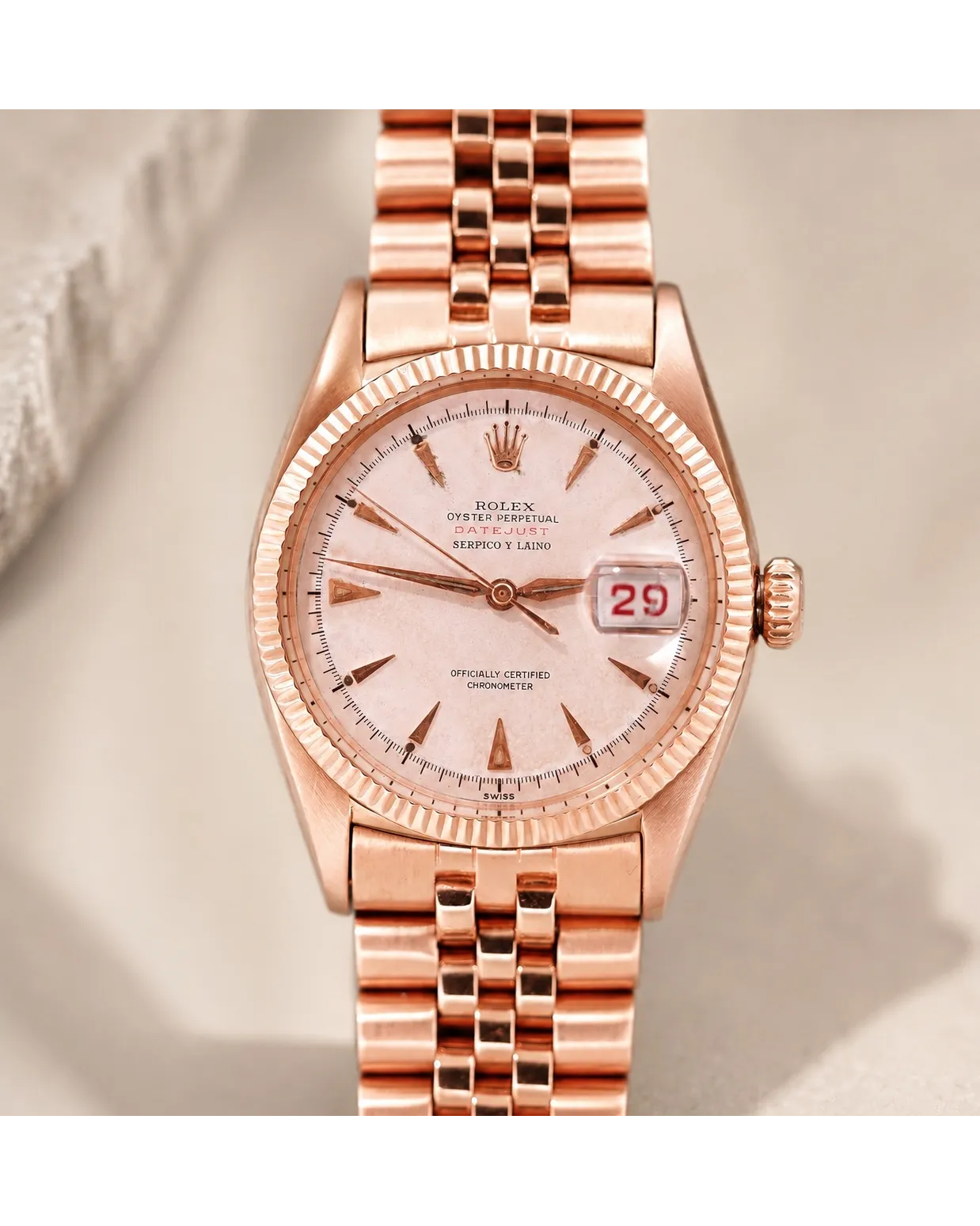
Introduced in 1958, the ref. 6610 succeeded the earlier 6350 and 6150 references, incorporating technical improvements gleaned from Rolex's relationship with high-altitude expeditions throughout the 1950s. The reference bore the DNA of Sir Edmund Hillary's 1953 Everest ascent, though scholars now attribute that expedition watch to the Oyster Perpetual ref. 6098 rather than the Explorer name itself. Regardless, the 6610 embodied the lessons learned: a hermetically sealed case with 100-metre water resistance, a movement built to withstand temperature extremes, and dial legibility that favoured function over ornamentation.
The 6610 housed the automatic Cal. 1030, a 25-jewel movement beating at 18,000 vph (2.5 Hz) with Rolex's proprietary Superbalance wheel and Breguet overcoil hairspring. This calibre offered both chronometric precision and remarkable robustness, qualities that made it the movement of choice for professional users throughout the late 1950s and early 1960s. The self-winding mechanism freed explorers from the ritual of manual winding in sub-zero conditions, a practical advantage that extended the watch's appeal beyond mountaineering into polar and jungle expeditions.
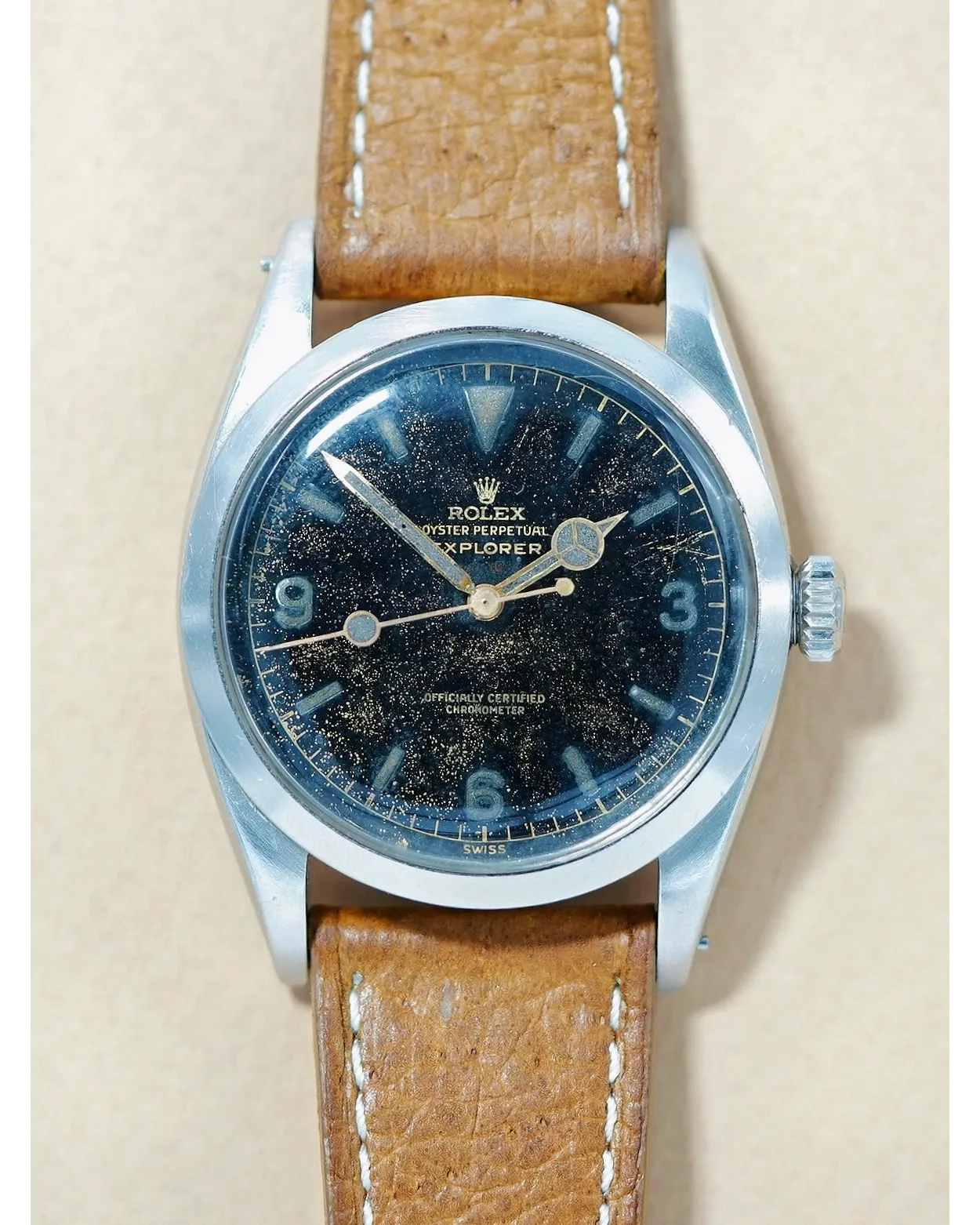
*The dial configuration of the 6610 remains its most recognisable feature*: applied Arabic numerals at 3, 6, and 9 o'clock rendered in 18ct gold, with luminous inserts for visibility in darkness. The broad arrow hands, also gold and filled with radium-based luminous material in period examples, provided instant readability against the matte black dial. This restrained aesthetic, born of genuine utility rather than stylistic affectation, has influenced generations of sports watches and remains strikingly modern more than six decades after production ceased.
Collectors prize the 6610 for its transitional position in Explorer history. Early examples featured gilt dials and radium lume, while later production saw the shift to applied white gold surrounds and, eventually, tritium. The reference also marked the last time Rolex would produce an Explorer with 36mm proportions and the 1030 calibre before the introduction of the 1016 in 1963, which would soldier on until 1989. Examples with original gilt dials, matching patina across hands and markers, and correct small-crown case architecture command significant premiums.
The 6610's legacy extends beyond collecting circles. It established the visual grammar that defines the Explorer line to this day: high-contrast legibility, modest proportions suited to wear under a parka sleeve, and an absence of complications that might compromise reliability in extreme environments. For those seeking an authentic connection to mid-century adventure horology, the 6610 offers both historical gravitas and daily wearability in equal measure.