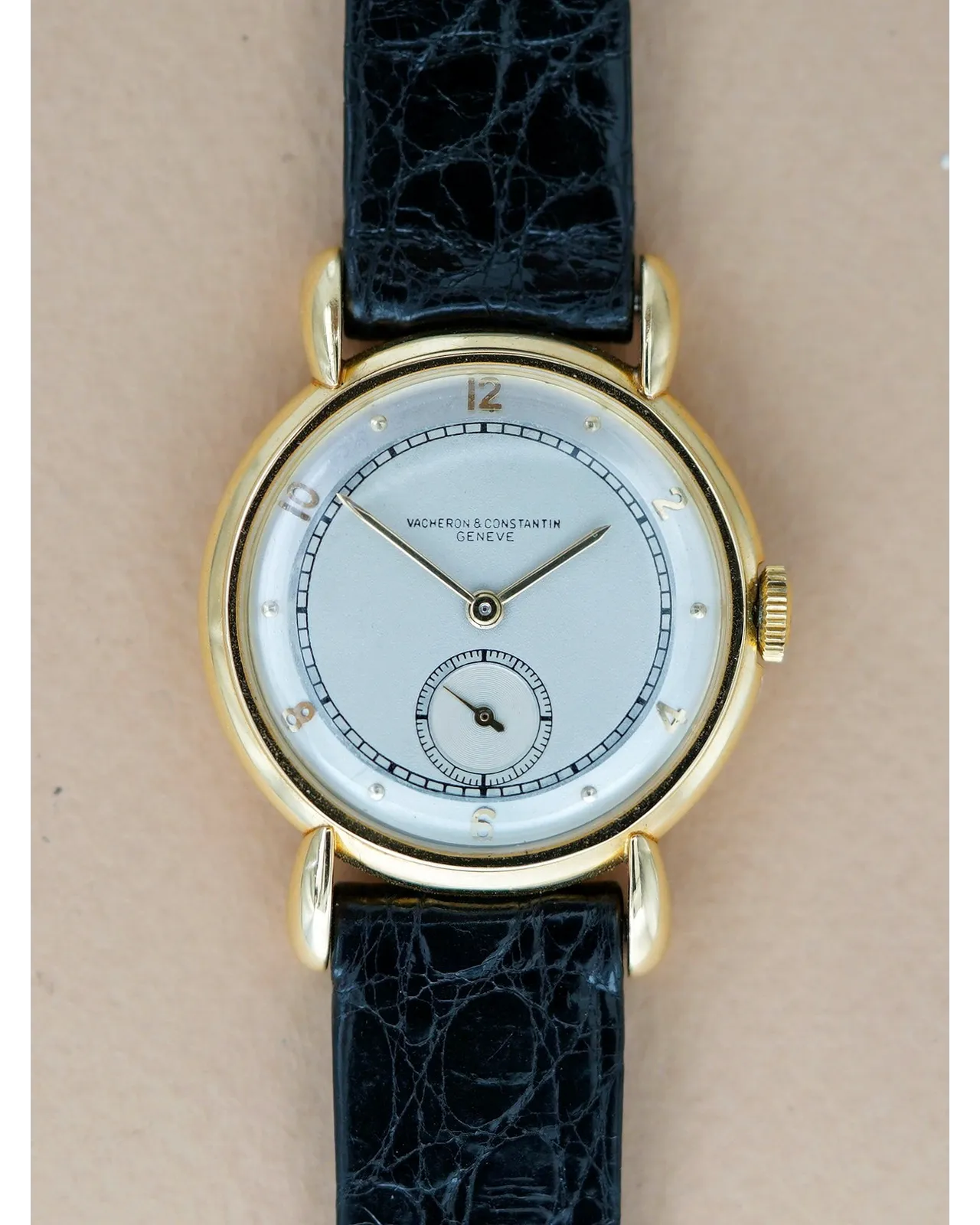
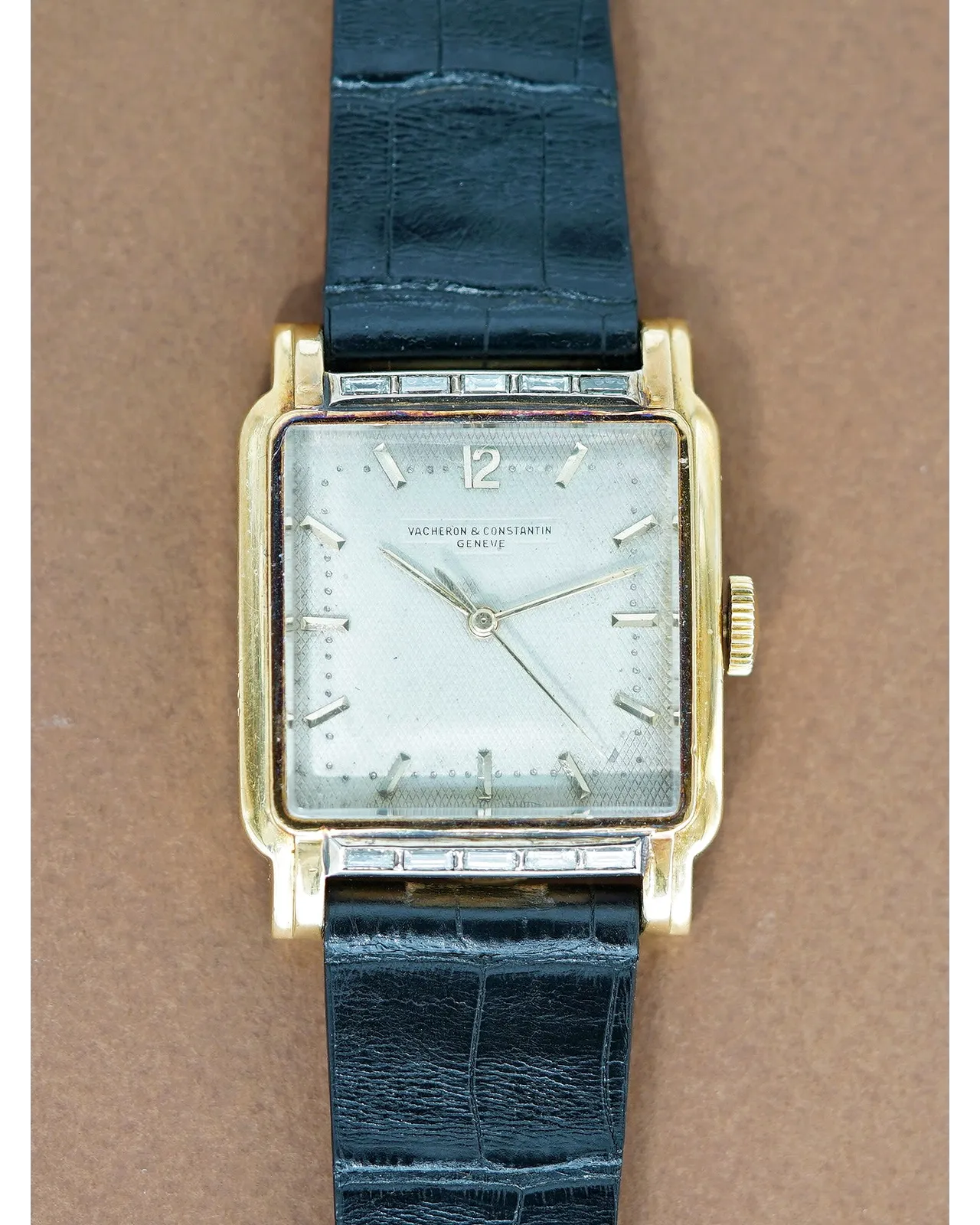
Vacheron Constantin emerged from the Second World War as one of the few Swiss houses to maintain uninterrupted production throughout the conflict, a testament to the firm's resilience and technical depth. The post-war period saw the manufacture concentrate on refined dress watches in precious metals, catering to a clientele that valued discretion and craft over ostentation. This example, dating from the late 1940s or early 1950s, belongs to that tradition: a compact 32mm yellow gold case housing a hand-wound movement of the sort that defined Swiss horology before the quartz revolution.
The proportions are characteristic of the era. At 32mm, the case sits comfortably within the conventions of mid-century menswear, when wristwatches were expected to slip beneath a cuff rather than command attention. Yellow gold was the metal of choice for dress watches during this period, prized for its warmth and the way it aged alongside its wearer. Vacheron Constantin cases from these decades were typically produced to exacting standards, with bezels, lugs, and casebands finished to a degree that remains impressive today.
The movement, a manually wound calibre typical of Vacheron Constantin's output during the 1940s and 1950s, would have been finished and adjusted with care. While we cannot verify the specific calibre without inspection, the manufacture's movements from this period were characterised by Geneva striping, polished bevels, and jewel counts appropriate to precision timekeeping. Frequencies were modest by modern standards, typically 18,000 vibrations per hour, but the robustness and longevity of these calibres have been proven by decades of service.
For collectors, mid-century Vacheron Constantin dress watches represent an accessible entry point into one of the holy trinity of Swiss watchmaking. *They lack the celebrity of a Patek Philippe Calatrava or the sporting cachet of a Rolex Submariner, but they offer something equally valuable: understated refinement and a direct link to the traditions of Geneva's Rue des Moulins.* Pieces such as this are increasingly sought after as the market matures and collectors look beyond the familiar references.