
27 May 2026 · 6 min read
Rolex Explorer ref. 6610: The First Official Explorer and Everest's Horological Legacy
By Wasting Time
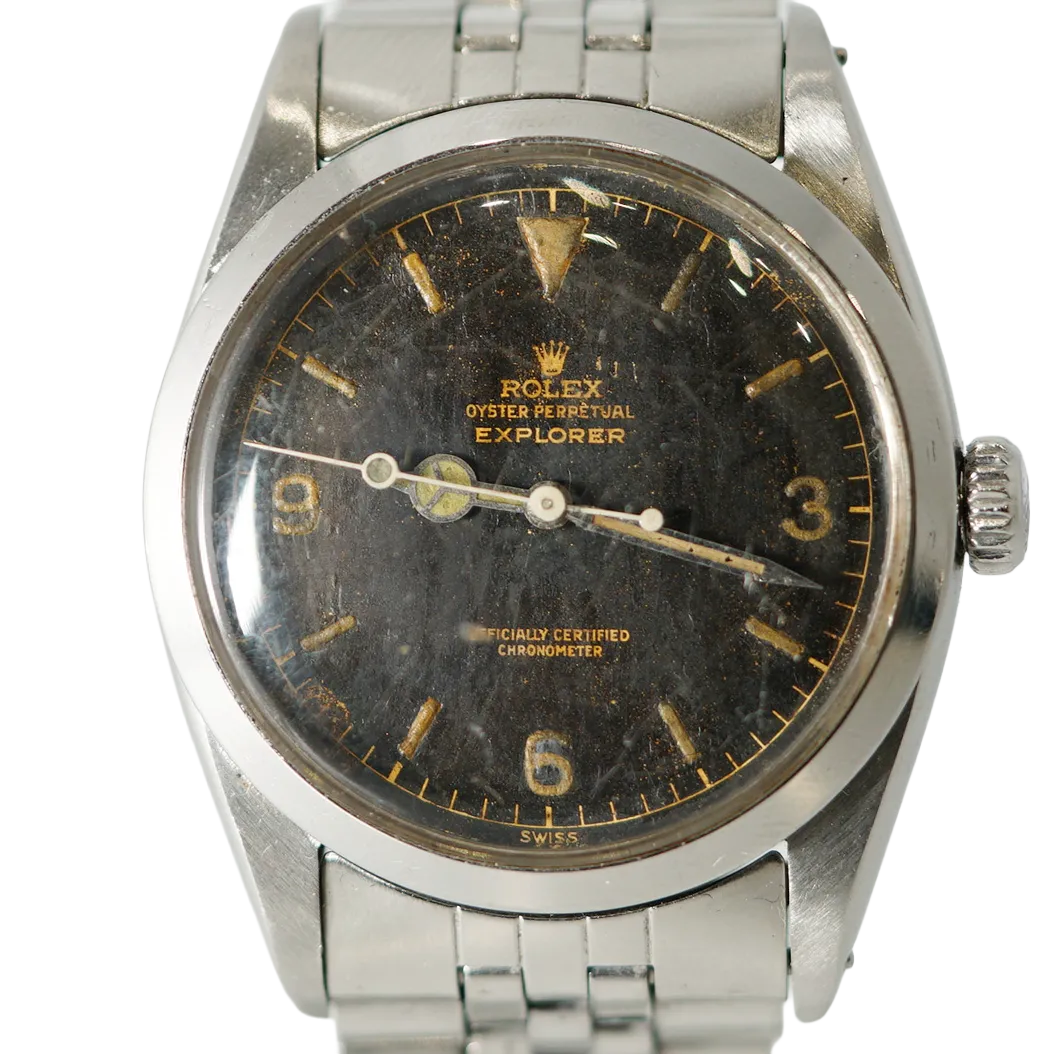
The <em>Rolex Explorer ref. 6610</em> stands as the first officially designated <em>Explorer</em>, introduced in the wake of the 1953 Everest ascent. This small-crown example embodies the reference's earliest production and the expedition heritage that defined <em>Rolex</em> tool watches.
The Rolex Explorer ref. 6610 occupies a singular position in the evolution of professional sports watches, marking the moment when Rolex formalised its expedition credentials into a distinct model line. Introduced around 1953-54 in the immediate aftermath of Sir Edmund Hillary and Tenzing Norgay's successful summit of Mount Everest, the 6610 was the first reference to bear the Explorer name printed on its dial. This was not merely branding, it represented Rolex's codification of decades of mountaineering partnership into a production wristwatch designed explicitly for extreme conditions. The reference bridged the experimental ref. 6350, worn during the Everest expedition itself, and the refined ref. 1016 that would carry the Explorer lineage forward for three decades. For collectors of vintage Rolex sports references, the 6610 represents the foundational chapter in one of watchmaking's most storied model families.
A Short History of the Reference
The Explorer ref. 6610 emerged during a pivotal era for Rolex, when the brand was actively translating field experience into commercial tool watches. Following the successful 1953 Everest expedition, during which various prototype Oyster Perpetual references accompanied the climbing team, Rolex moved swiftly to capitalise on the publicity. The 6610 became the production embodiment of that achievement, bearing the Explorer designation and the 3-6-9 dial configuration that had proved legible in alpine conditions. Early production examples feature small 'pencil' crowns without crown guards, a detail that collectors prize for its visual purity and period correctness. These small-crown cases measure approximately 36mm in diameter and retain the slim proportions characteristic of mid-century Rolex sports watches before the gradual trend toward larger dimensions.
The reference housed Cal. 1030, a self-winding movement operating at 18,000 vibrations per hour with 25 jewels. This calibre delivered robust timekeeping suited to genuine field use, incorporating Rolex's proven shock-resistance mechanisms and a free-sprung balance for improved positional stability. The movement's reliability made the 6610 a natural choice for professional applications beyond mountaineering, polar surveys, geological expeditions, and military deployments all benefited from the watch's combination of precision and durability. The Oyster Perpetual case construction provided water resistance sufficient for most environments, though not to the depths Rolex would later achieve with the Submariner line. Production spanned roughly a decade, with later examples transitioning to wider crowns as Rolex refined the case architecture. The relatively short production window and the fragility of radium luminous material mean that well-preserved 6610 examples are considerably rarer than later 1016 production, particularly those retaining original small-crown cases and unmolested dials.
The Piece in Front of You
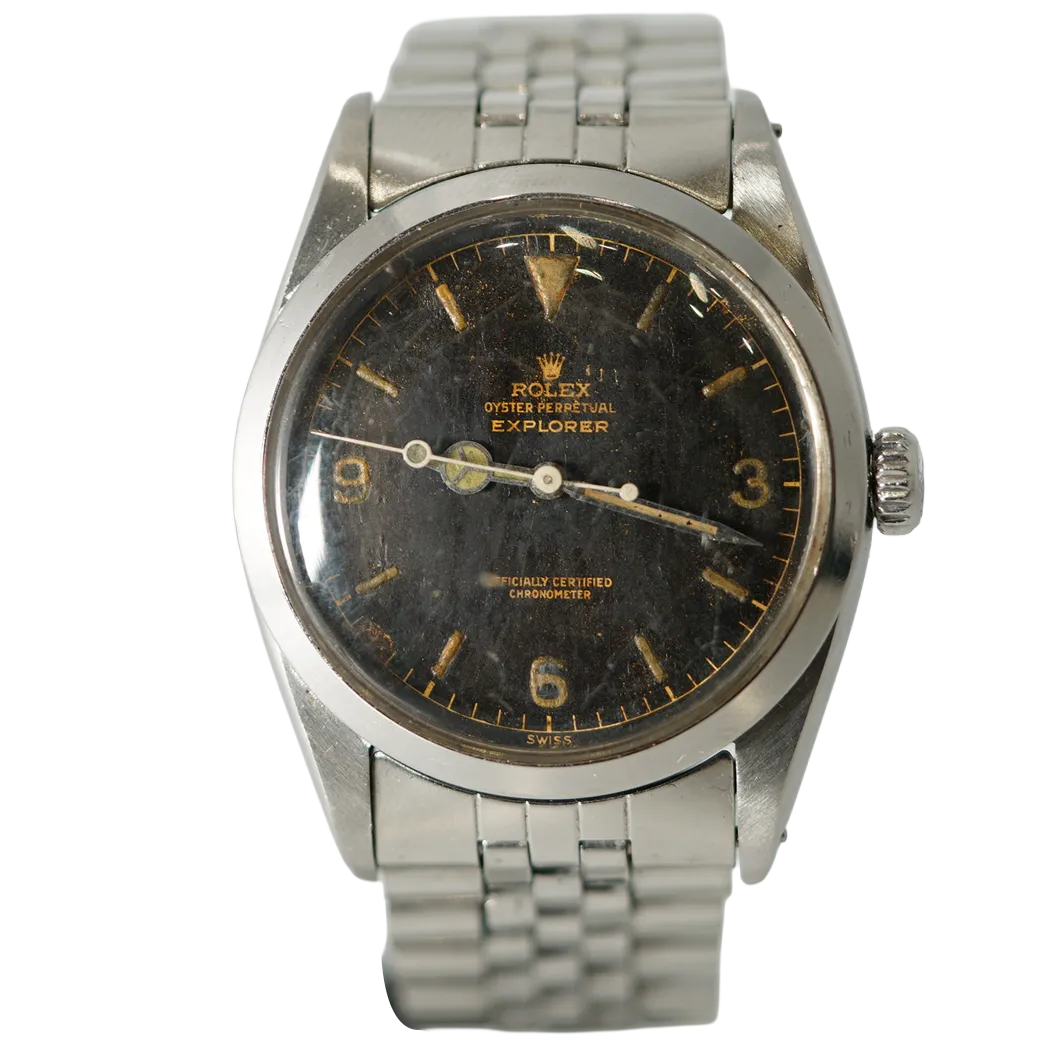
This example retains the small-crown case architecture that defines the 6610's earliest production period. The absence of crown guards and the slender proportions of the crown itself give the watch a visual purity that later, more robust iterations sacrificed in favour of improved water resistance. The case flanks should display crisp bevels between the lugs and well-defined chamfers, details that are easily compromised by over-polishing. As is typical with radium-dial Rolex sports references from this era, prospective collectors should examine the dial surface carefully for signs of ageing, lume degradation, and originality. Radium plots can exhibit various states of patina, from warm cream tones to deeper amber or even flaking in cases of severe degradation. The authenticity and condition of the luminous material represent a critical consideration for collectors, as relumed dials significantly diminish value and historical integrity.
The 3-6-9 dial configuration, radium-lumed Arabic numerals at the cardinal positions, luminous Mercedes hands, and a rail-track minute ring, established the visual language that remains synonymous with the Explorer name. The dial surface itself should be assessed under magnification for any signs of refinishing, which can manifest as overly uniform printing, incorrect fonts, or excessively bright lume plots inconsistent with the watch's age. The Rolex Oyster Perpetual case construction provides the foundation for the watch's durability, with a screw-down case back and Twinlock crown system ensuring adequate protection against moisture and dust ingress. Without physical inspection, comprehensive assessment of this specific example's preservation remains necessarily limited, though the presence of the small-crown case and radium dial confirms its position within the reference's early production.
On the Wrist and the Movement
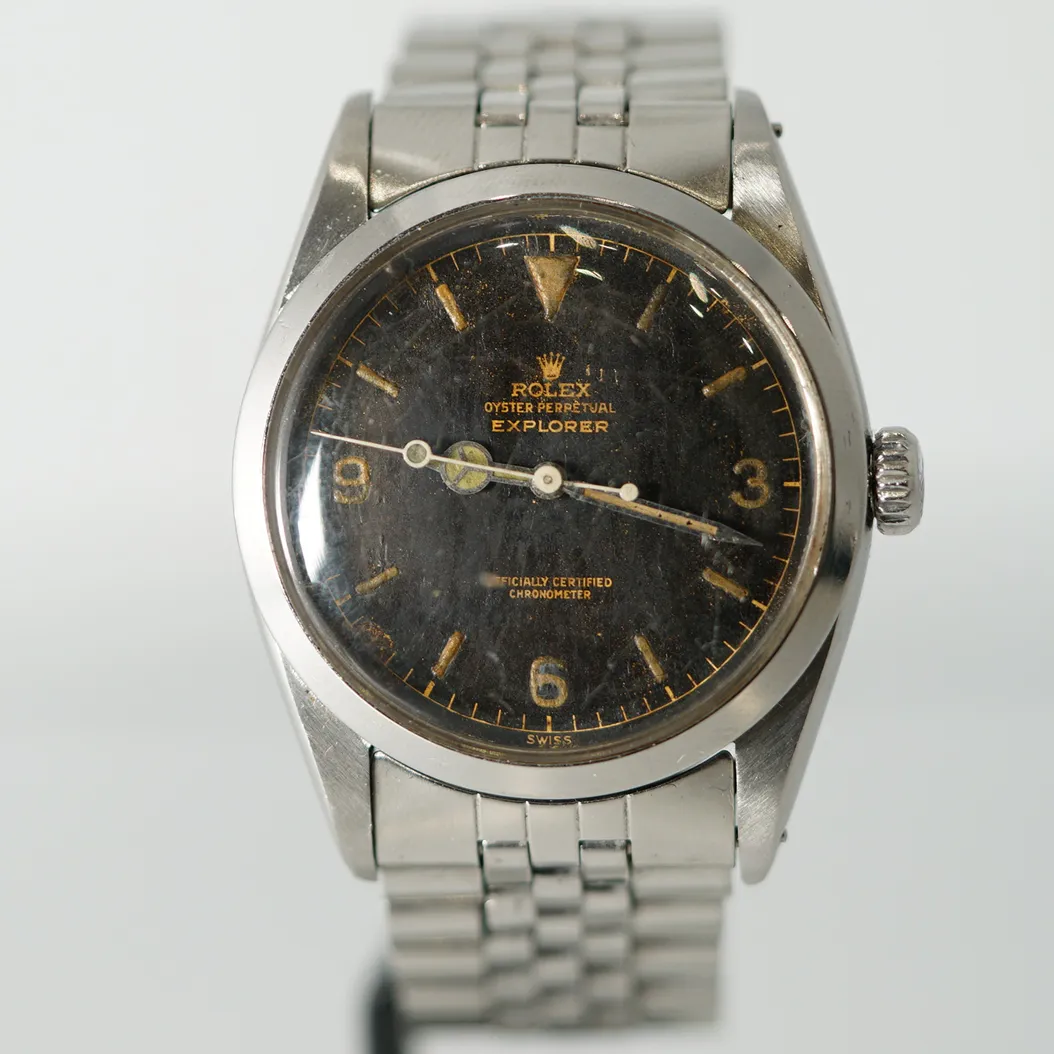
At approximately 36mm, the 6610 wears comfortably on a wide range of wrist sizes, reflecting mid-century proportions before the industry's gradual shift toward larger diameters. The small-crown case sits elegantly on the wrist, with a profile that balances presence and discretion. The absence of crown guards contributes to a streamlined silhouette, though collectors should exercise appropriate caution to avoid impact damage to the crown itself. The watch's modest thickness and relatively short lug-to-lug measurement ensure it slips easily beneath shirt cuffs, a practical consideration given the Explorer's original remit as a tool watch for professional use. The 3-6-9 dial proves immediately legible, with the high-contrast Arabic numerals and Mercedes hands facilitating rapid time reading even in challenging lighting conditions, precisely the functionality required in alpine environments.
Cal. 1030 represents a high point in Rolex's mid-century movement development, incorporating the brand's expertise in self-winding mechanisms and shock resistance. The calibre runs at 18,000 vph, a frequency that balances precision with longevity, and features a free-sprung balance for improved positional stability. The 25-jewel movement includes a full rotor winding system and Rolex's own shock-protection mechanism, details that contributed to the 6610's reputation for reliability in demanding conditions. Given the watch's age, movement condition and service history represent important considerations. Buyers should satisfy themselves regarding the integrity of gaskets and seals if water resistance is a priority, though most collectors of vintage Rolex sports references treat such watches as historical artefacts rather than functional dive instruments. A well-maintained Cal. 1030 should deliver acceptable timekeeping performance, though expectations should account for the realities of a movement now approaching seven decades of age.
Why It Matters Now
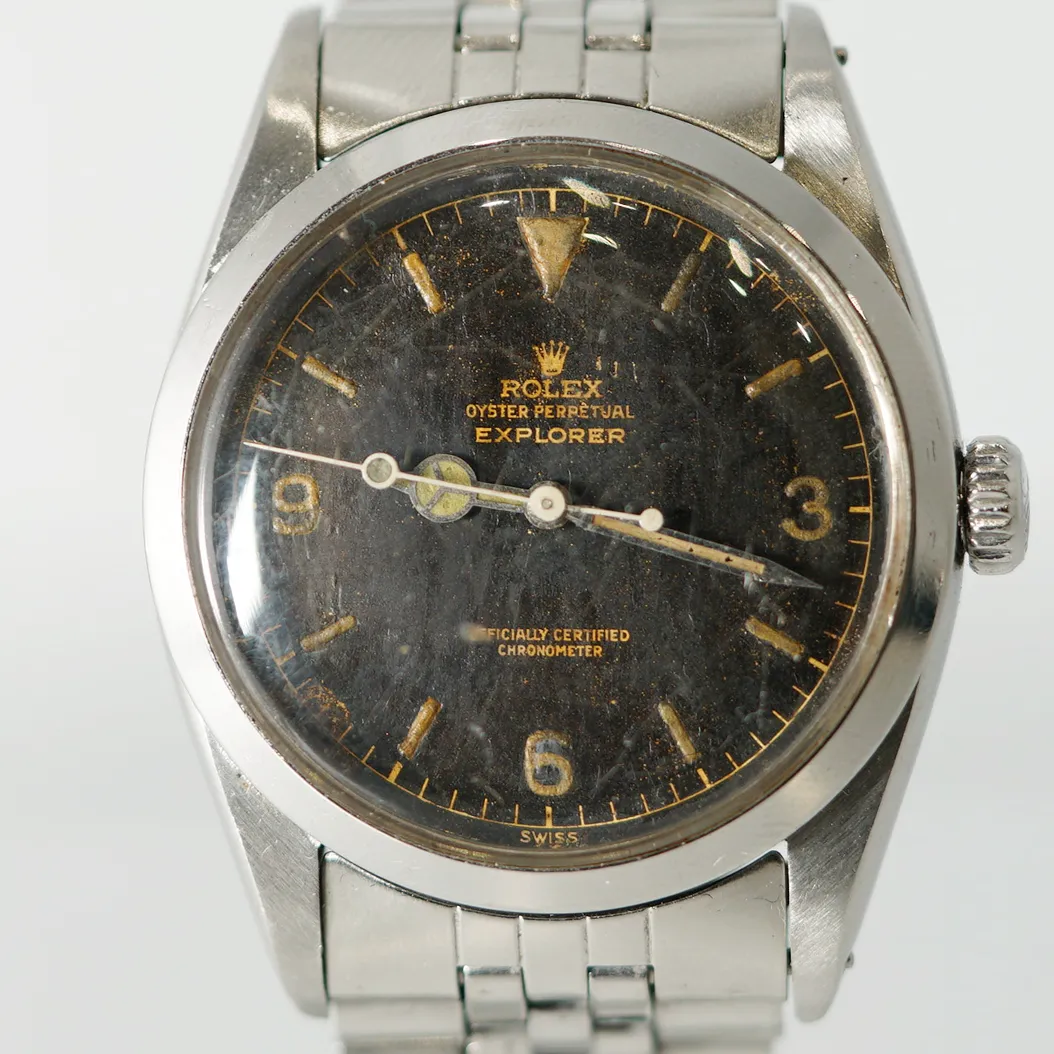
The Explorer ref. 6610 commands serious collector attention as the first officially designated Explorer reference and the model most directly connected to the Everest story that underpins Rolex's tool watch mythology. In an era when vintage Rolex sports references have achieved unprecedented market prominence, the 6610 represents a historically significant alternative to the more commonly encountered Submariner and GMT-Master references from the same period. The reference's relatively short production window and the challenges inherent in preserving radium dials mean that original, unrestored examples are increasingly difficult to locate. Small-crown cases with intact factory bevels, unmolested dials with stable radium plots, and correct hands represent the core criteria for serious collectors, though such configurations grow rarer as decades of ownership, servicing, and well-intentioned restoration take their toll.
The market for 6610 references has matured considerably, with collectors now demonstrating sophisticated appreciation for originality, provenance, and condition nuances. Dial variants, whether gilt or silver printing, differing lume plot sizes, or the presence of exclamation marks flanking 'Swiss' at six o'clock, command varying premiums depending on rarity and desirability. The small-crown configuration particularly appeals to collectors who prize the reference's earliest production characteristics, accepting the practical trade-offs in water resistance for the sake of historical authenticity. As the broader vintage Rolex market continues to stratify according to condition and originality, the 6610 benefits from its position as a foundational reference with direct expedition heritage and limited surviving population. For collectors seeking an entry point into serious vintage Rolex sports watches with genuine historical significance, the Explorer ref. 6610 offers a compelling alternative to more publicised references, provided one exercises appropriate due diligence regarding condition and authenticity.
The Rolex Explorer ref. 6610 endures not merely as a historical curiosity but as a functional wristwatch that codified expedition watchmaking into a production model. Its small-crown case and radium dial connect contemporary collectors to the formative years of professional tool watches, when Rolex was actively translating field experience into commercial products designed for genuine use in extreme conditions. For those who appreciate the intersection of horological craft and exploration history, the 6610 represents an opportunity to own the reference that started the Explorer lineage.
This piece is currently available through Wasting Time. View the listing or enquire for full provenance and pricing.