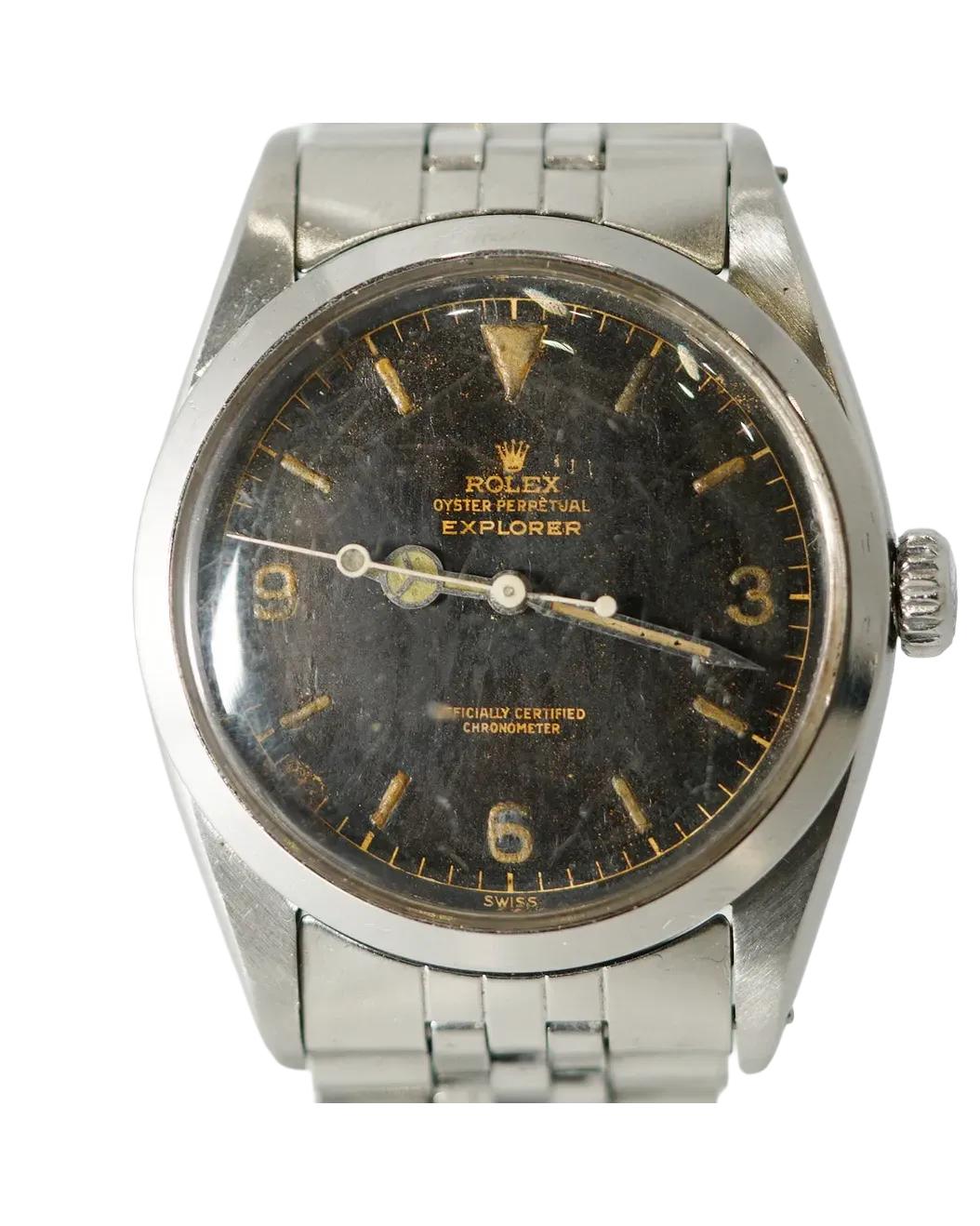
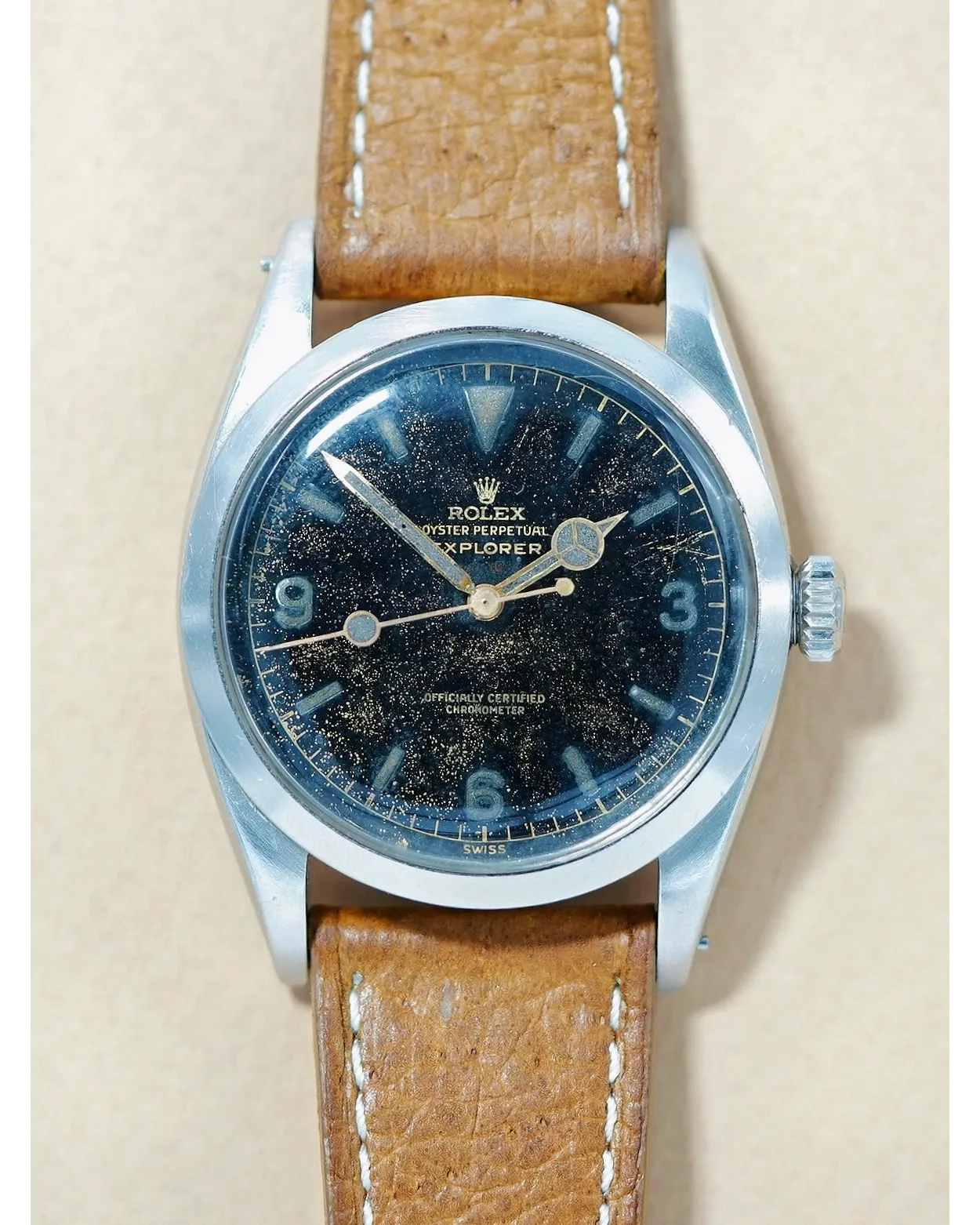
The Explorer ref. 6610 occupies a pivotal position in Rolex sports watch history, bridging the experimental ref. 6350 and the refined ref. 1016 that would define the line for three decades. Introduced around 1953-54 in the immediate wake of Sir Edmund Hillary and Tenzing Norgay's Everest ascent, the 6610 was Rolex's first official Explorer reference, bearing the model name printed on the dial and embodying the brand's expedition heritage in wristwatch form.\n\nThe reference was produced with two distinct case architectures: early examples feature small 'pencil' crowns without crown guards, a detail that collectors prize for its visual purity and historical authenticity. Later examples transitioned to wider crowns as Rolex refined the Oyster case's water resistance. Housing Cal. 1030, a self-winding movement running at 18,000 vph with 25 jewels, the 6610 delivered robust timekeeping suited to genuine field use. The calibre's proved reliability and shock resistance made it a natural choice for professional applications.\n\nThe 6610 saw service in some of the twentieth century's most demanding environments, from Himalayan expeditions to polar surveys. Its 3-6-9 dial configuration, radium-lumed Arabic numerals at the cardinal positions, luminous Mercedes hands, and a rail-track minute ring, established the visual language that remains synonymous with the Explorer name. The case measures approximately 36mm, a dimension that wears comfortably and reflects mid-century proportions before the gradual trend toward larger diameters.\n\nToday, the ref. 6610 commands serious collector attention as the *first officially designated Explorer reference and the model most directly connected to the Everest story that underpins Rolex's tool watch mythology. Original dials with intact radium plots, unpolished cases retaining their factory bevels, and correct 'gilt' or 'silver' dial variants are increasingly difficult to locate. The reference's relatively short production window and the fragility of radium luminous material make well-preserved examples rare, particularly when compared to the ubiquity of later 1016* production.