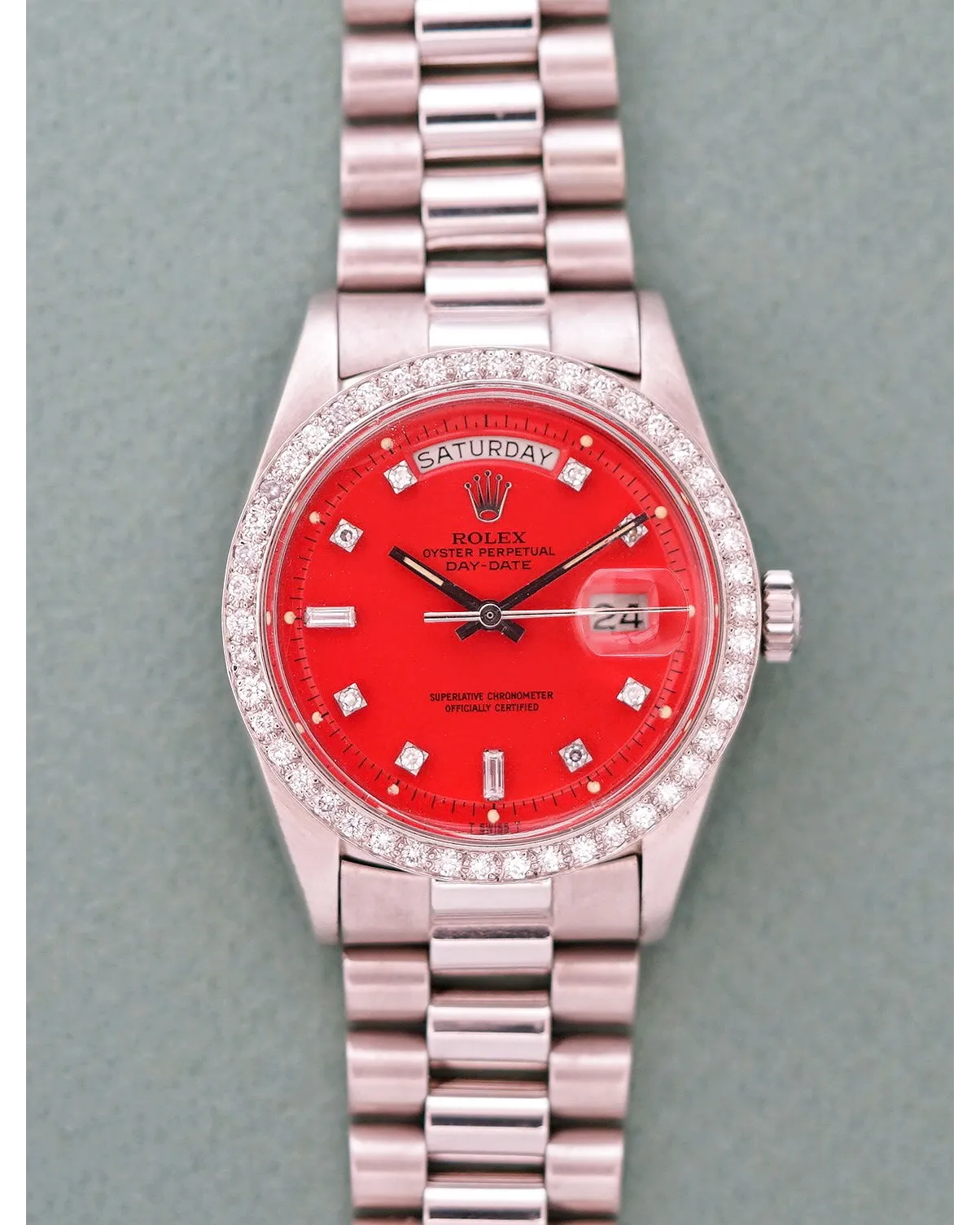
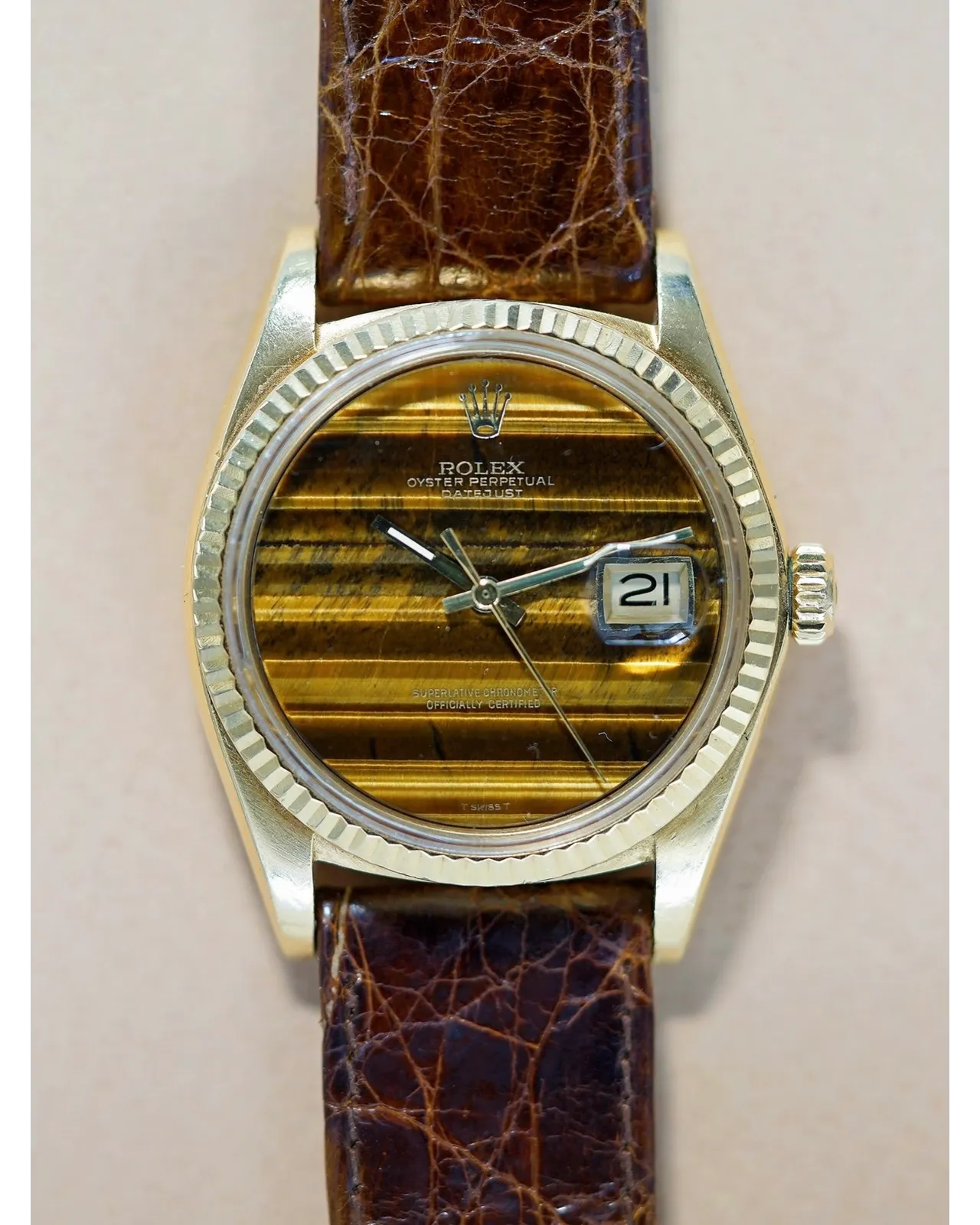
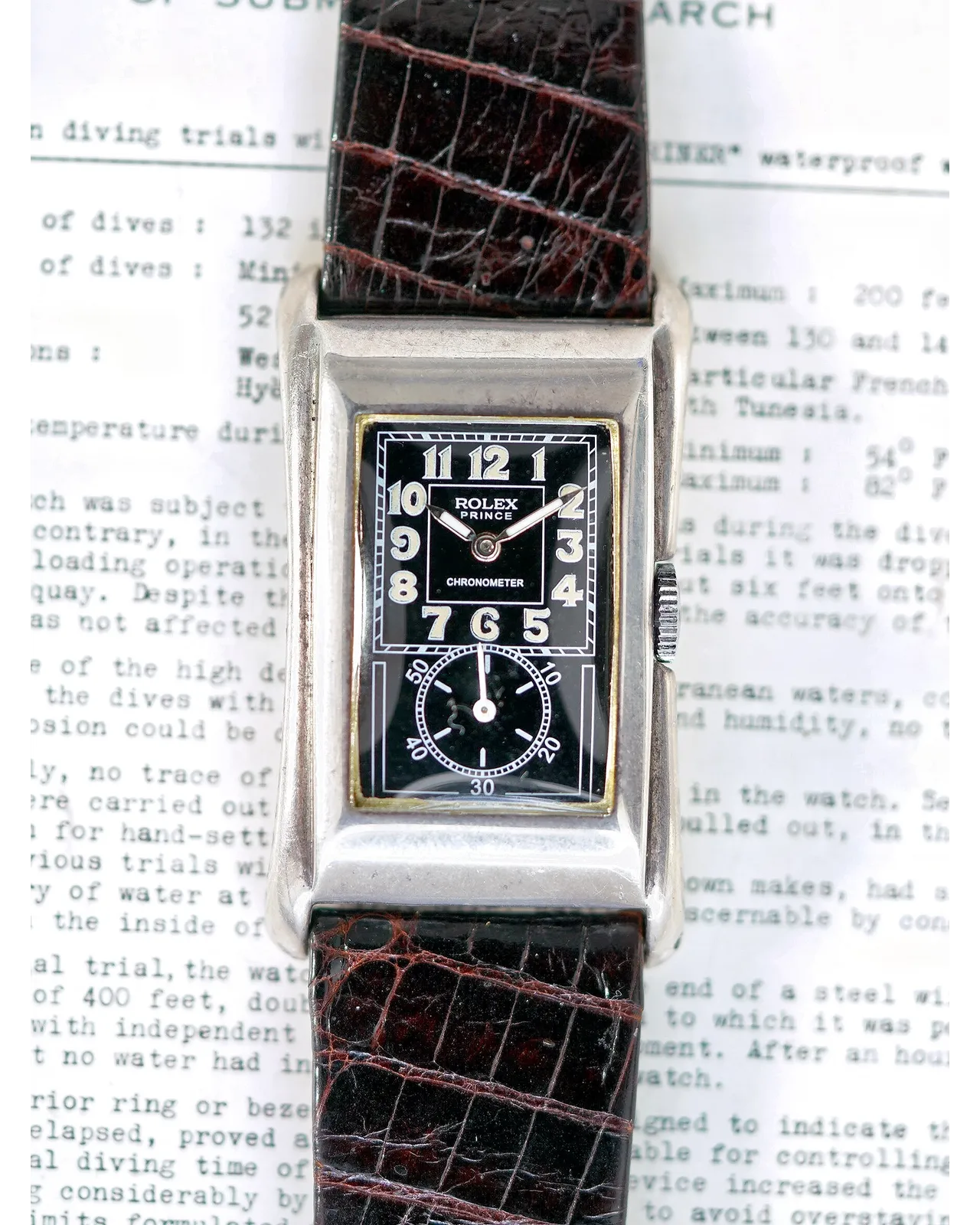
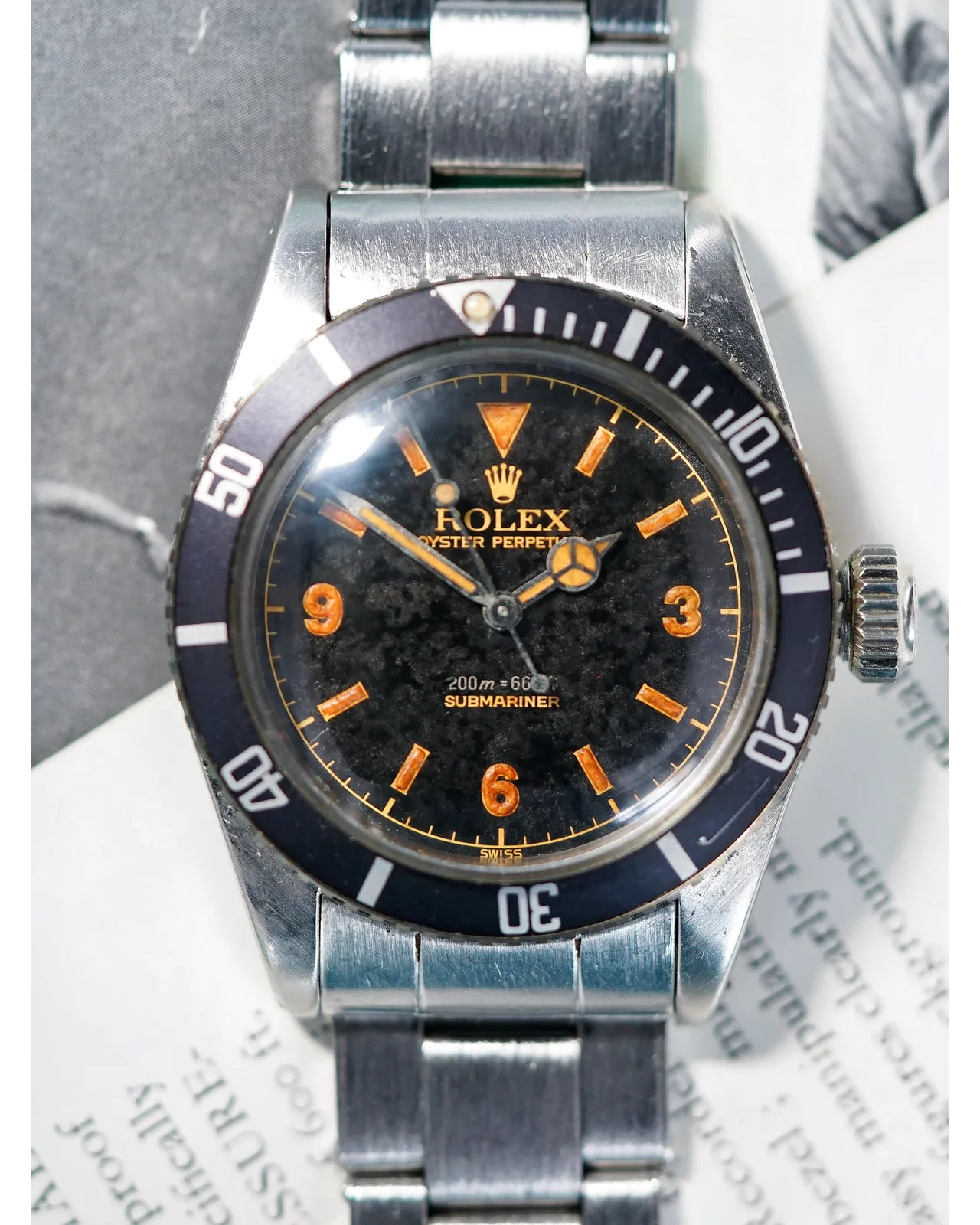
The Day-Date was introduced in 1956 as the first wristwatch to display both the date and the day of the week spelled out in full. Reserved exclusively for precious metal cases, it became synonymous with power and prestige, earning its 'President' sobriquet through association with world leaders and heads of state. The ref. 1804 belongs to the first generation of Day-Date references, produced from the late 1950s through to the early 1990s, and represents one of the longest-running iterations in the model's history.
This example is cased in white metal, either platinum or 18-carat white gold, both of which were offered during this period. Distinguishing between the two requires hallmarking or metallurgical analysis, as Rolex employed similar finishing techniques for both alloys. The 36mm case retains the classic proportions that defined mid-century Rolex dress watches, with a fluted bezel that has become inseparable from the Day-Date identity. *The white metal case remains comparatively rare within the wider Day-Date production*, as yellow gold examples dominated the catalogue throughout most of the reference's lifespan.
Inside, the watch is powered by Rolex's automatic Calibre 3055, introduced in 1977 as a successor to the Cal. 1556. This 27-jewel movement beats at 28,800 vph (4 Hz) and incorporates a quickset date mechanism, allowing independent adjustment of the date without advancing the hands. The day display is available in a choice of 26 languages, a feature that underscored Rolex's ambitions as a truly global manufacture.
The Day-Date ref. 1804 occupies an interesting position within the model's chronology. Produced over several decades, it witnessed subtle evolutions in dial typography, bracelet construction, and clasp design, yet retained its essential character throughout. Collectors today appreciate these references for their historical continuity and the quiet authority they convey, particularly in white metal variants that eschew the overt visibility of yellow gold.
This watch is offered without its original box or papers. Its appeal lies in the purity of the design and the mechanical integrity of the Day-Date concept, refined over decades of production and worn by those who valued discretion as much as distinction.