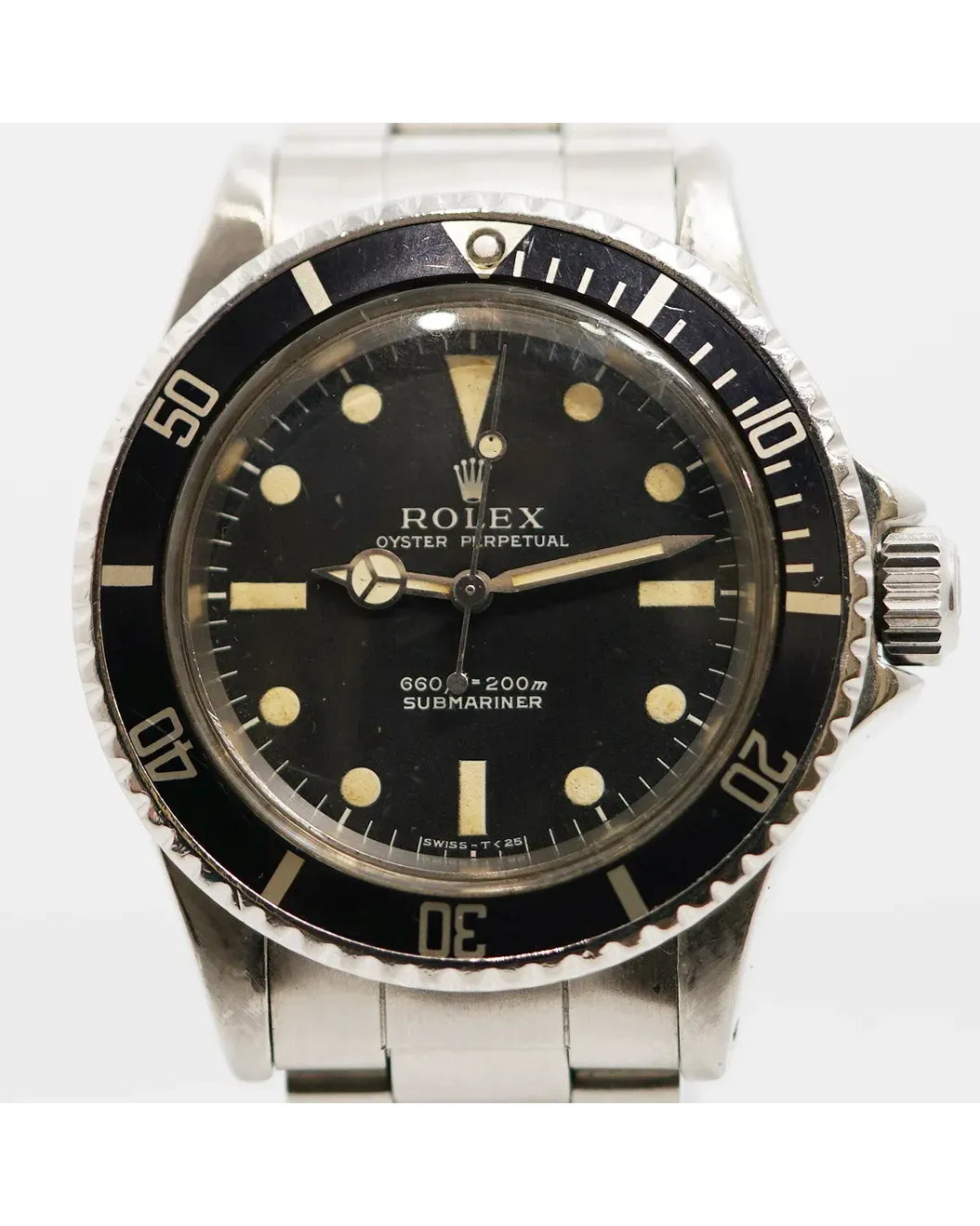
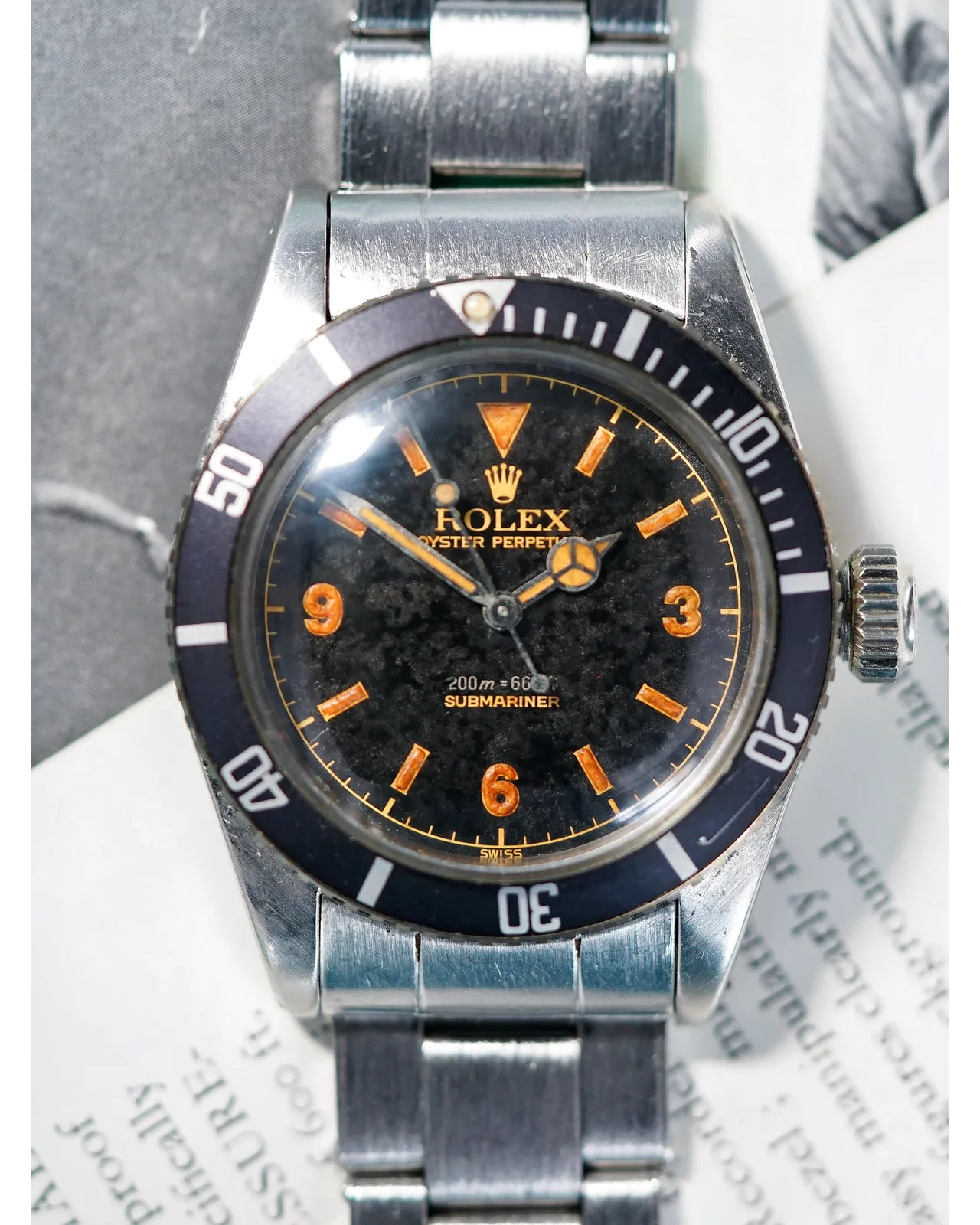
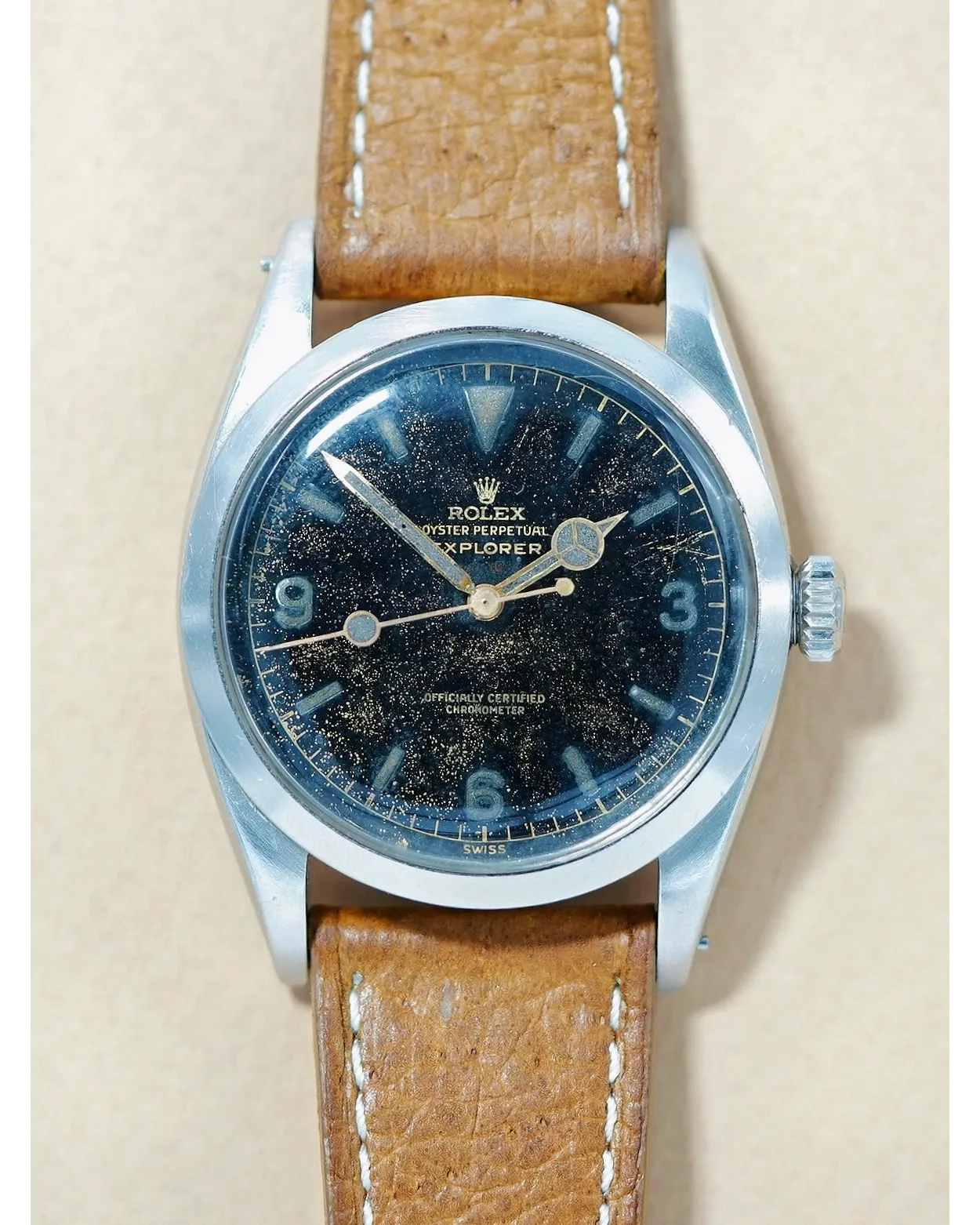
Introduced in 1962 and remaining in production until 1989, the Rolex Submariner ref. 5513 represents the purest expression of the tool watch philosophy. Unlike its ref. 5512 predecessor, which carried COSC chronometer certification, the 5513 was marketed as a robust professional instrument at a more accessible price point, omitting the gilt \"Superlative Chronometer Officially Certified\" designation in its earliest iterations. Over its twenty-seven-year lifespan, the reference evolved through numerous dial variants, from gilt chapter rings and exclamation-point lume plots to matte dials and the glossy white-gold surrounds of the 1980s, making it one of the most extensively documented references in Rolex's archive.\n\nMechanically, the 5513 was powered by the non-chronometer Cal. 1530 until approximately 1964, thereafter by the Cal. 1520, and finally by the higher-beat Cal. 1530 from the early 1970s onward. The movement architecture, derived from Rolex's proven 1500 series, beat at 19,800 vph (2.75 Hz) and offered a modest 42-hour power reserve, sufficient for professional use. The 40mm Oyster case, water-resistant to 200 metres, featured crown guards from 1963 and acrylic crystals throughout production, maintaining the watch's utilitarian character even as its stablemates adopted sapphire.\n\nThe 5513 gained cultural weight through its association with military units, notably the British Royal Navy and various Special Forces, who issued the watch in modified \"MilSub\" configurations. On screen, it appeared in Live and Let Die (1973) and Licence to Kill (1989), cementing its place in the popular imagination as the quintessential Bond Submariner. Its accessibility relative to earlier gilt examples and COMEX variants has made it a perennial favourite among emerging collectors.\n\nToday, collectors prize the 5513 for its versatility and the archaeological pleasure of identifying its many dial and hand permutations. Early gilt examples, unpolished cases retaining full lug definition, and military-issued variants command significant premiums, while later glossy-dial versions remain attainable entry points into vintage Rolex collecting. The reference occupies a rare position: equally at home on a NATO strap as a daily wearer or behind glass as a studied piece of horological history.